Nakuru County has expanded its water network by 488 kilometers over the past year, allowing 17,070 additional households to access clean drinking water.
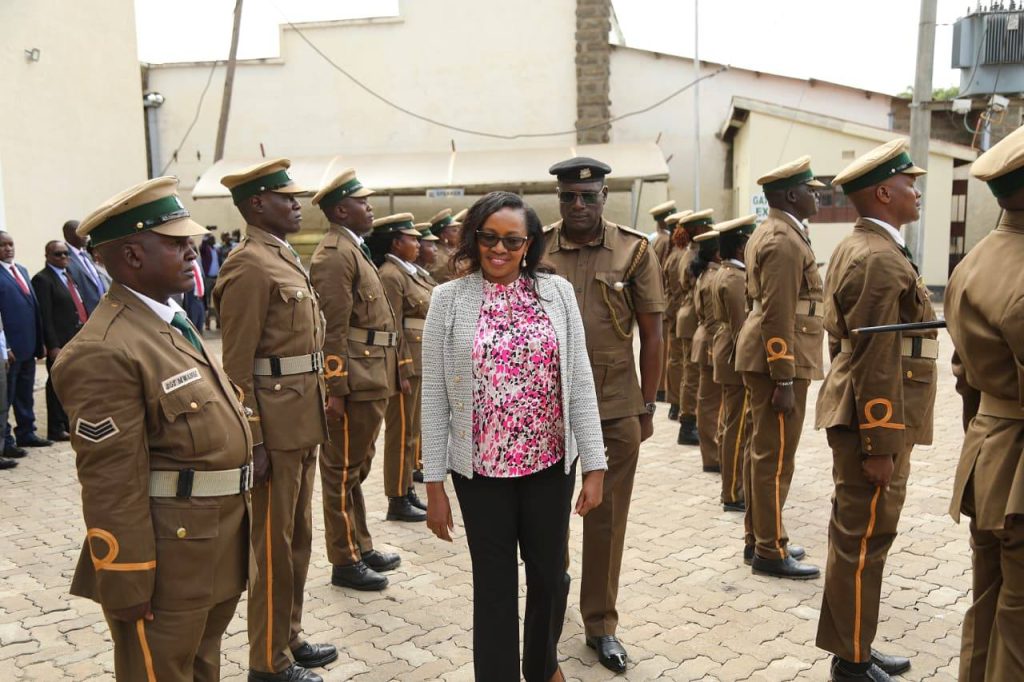
Governor Susan Kihika announced the milestone in her State of the County Address at the County Assembly of Nakuru, noting that the expansion is as a result of 132 water projects completed across the county.
With the new infrastructure in place, she added, water connectivity rose from 59.2 percent to 62.33 percent, marking one of the strongest year-on-year improvements in recent years.
The Governor said the administration has prioritized investment in water supply, sewer expansion, and rehabilitation of essential infrastructure to keep up with growing demand.
“We have drilled 72 boreholes and the equipping of more than 90 others to strengthen supply reliability,” she stated adding that 92 boreholes were solarized to promote sustainability.
Additionally, some 14 water kiosks constructed, and 7 natural springs protected while another 11 boreholes were restored to functionality, providing reliable water for an estimated 6,000 residents.
To strengthen long-term supply, the county has also procured a Sh70 million drilling rig capable of sinking at least 130 new boreholes in the coming year.
In Naivasha’s Kabati area, the county completed a one-kilometre sewer line and 200 household connections. Flamingo Estate saw 66 toilet blocks rehabilitated and a shift from septic tanks to sewer systems, benefiting about 300 residents.
“Further works included 300 metres of new sewer lines in Paul Machanga Estate and 1.45 kilometres of sewer extensions in USAID, TPH, and Agape estates, collectively improving sanitation reliability for more than 300 households,” she stated.
Among the key sanitation projects underway are the Barnabas–Mwariki B and Neylan sewer developments, which will provide safer wastewater management for nearly 17,000 residents.
On the water supply front, major investments are ongoing in Longonot, Kamuyu, Muciringiri, Upper Mirera and Bahati, where communities have long faced chronic shortages.
She cited the Chemususu Water Project, set to serve 60,000 residents, noting completion of the 41-kilometre Emkwen–Mogotio–KoiSamo line and progress on Nguso Rafiki, Molo lines.
Once finished, the system will deliver 6,000 cubic metres of water daily. She reiterated that the county is also working with the national government to resume construction of the Itare Dam in Kuresoi.
“We have distributed a total of 5,620 meters: 2,205 in Gilgil, 1,165 in Elburgon, Molo, and Kuresoi, 1,050 in Salgaa and Rongai, 1,000 in Njoro, and 200 in Subukia and Bahati,” she said.
The Governor said 30 air-quality sensors were installed, four dumpsites rehabilitated, and new recycling projects now convert plastics and other waste into construction materials, furniture, briquettes and biogas.
Under the FLLoCA climate resilience programme, 48 projects have been delivered across water, environment and agriculture, benefiting more than half a million people.
The county restored Lion’s Garden, Molo River, Mireroni Wetland, Tayari and Kiboko Springs, planted 1.5 million trees, and expanded community engagement through clean-ups and festivals.
“As we confront the realities of climate change, we continue to respond with purpose and determination,” she stated pledging to continue investing in sustainable infrastructure to improve essential services for residents.