Bees continue to play key role towards sustainable and alternative source of income benefiting most indigenous communities in the country especially those who practice hunting na d gathering as well as pastoralists.
Bee products.PHOTO/PRISTONE MAMBILI
Despite bee keeping having potential to improve the livelihoods of many individuals and communities through income generation enhancing food security through pollination and promoting environmental conservation, there has been challenges in protecting bees.
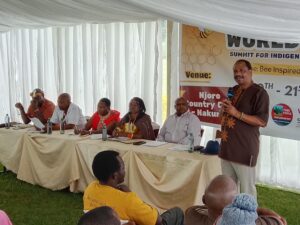
This was revealed on May 20, 2025 as indigenous communities gathered in Njoro, Nakuru County to celebrate World Bee Fay.
During the World Bee Day Honey Summit & Exhibition meeting, it emerged that there lack policies on matters bee protection.
The speakers at the event called out Lawmakers to ensure formulation of policy towards the same.
Christine Kandie-a leader with Endorois Indigenous Women Empowerment Network (EIWEN) addressing press during the summit.PHOTO/PRISTONE MAMBILI
Christine Kandie- a leader with Endorois Indigenous Women Empowerment Network(EIWEN) reiterated the need for a policy in place.
“We are coming together as Indigenous peoples to find solutions towards protection of bees,” she stated.
According to her, there is need to ensure policies towards the same as it also helps in food security for the country.
She took an issue with industries that have continued to pollute the environment through chemicals effluents.
“I want to call out the industries that are using chemicals messing up our bees that time is now that they re-think. We need concerted effort in protecting our bees who are key agents of pollination,” she stated.
Sentiments echoed by Director YIAKU Laikipia Trust Jenifer Koinate .
YIAKU Laikipia Trust Director Jenifer Koinate addressing press.PHOTO/PRISTONE MAMBILI
According to her, regulations are key in shaping bee keeping.
On his part, Ogiek Peoples Development Program Director Daniel Kobei reiterated the need for proper policies on bees protection.
Ogiek Peoples Development Program Director Daniel Kobei addressing during the Summit.PHOTO/PRISTONE MAMBILI
He noted that the climatic change and use of chemicals has continued to impact negatively on bees.
This, even as been keeping has seen marginalized indigenous communities recognized.
Wilson Lemeraniti from Lmartin People Community from Samburu County reveals that Bee keeping has seen them recognized as compared to before when they were forgotten with no representation even in political spaces.
Sentiments echoed by Shadrach Jomo Murunga from Tharaka Society for Alternative Learning and Transformation(SALT) and Emily Leitiko from indigenous YIAKU community in Laikipia.
Simon Chesang from Endorois Lake Bogoria and bee keeper called for need for national and county governments to ensure bee policy in place to help protect bees.
“We need to avert the use of chemicals that are posing challenge to bees in this country,” he said.
The World Bee Day Honey Summit & Exhibition, is a flagship initiative by EIWEN, OPDP, Society for Alternative Learning & Transformation(SALT),YLT and LMARTIN that celebrates the vital role of bees and empower indigenous communities in Kenya through sustainable beekeeping practices, embodying the theme ‘Bee Inspired by Nature to Nourish Us All’.
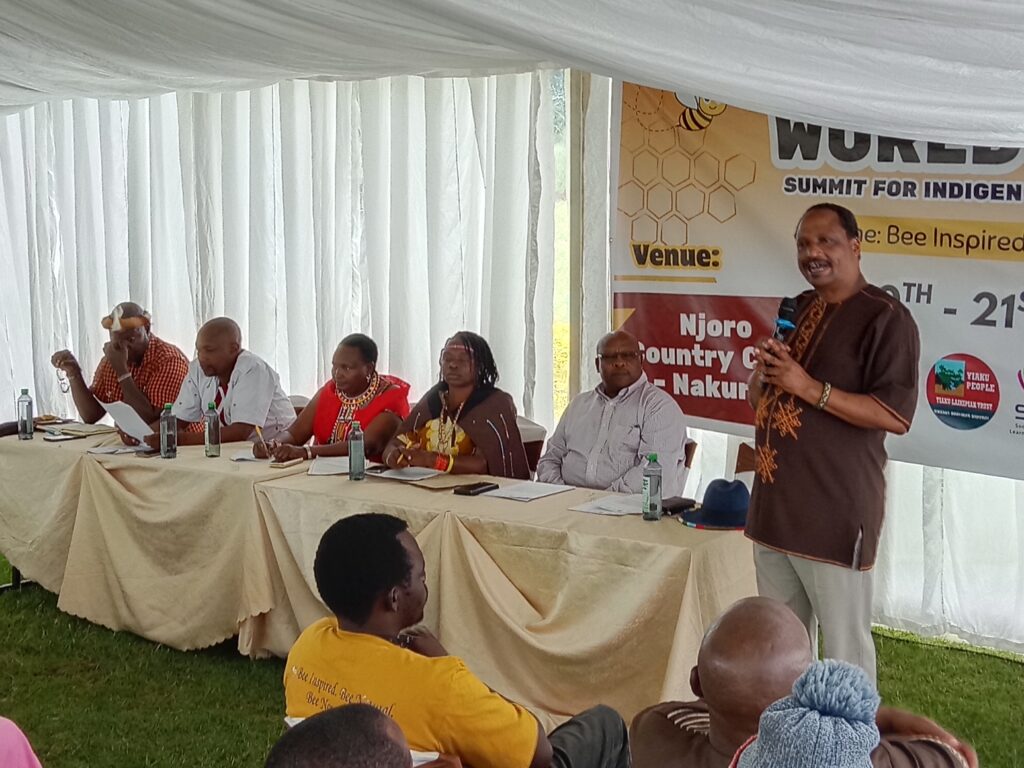
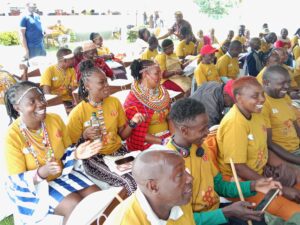
Participants during the Summit.PHOTO/PRISTONE MAMBILI
The two-day event fostered knowledge sharing, showcasing innovation, and facilitated strategic discussions to promote environmental conservation, enhance food security and unlock the economic potential of beekeeping within the indigenous communities.
The collaboration seeks to strengthen beekeeping as a sustainable livelihood, enhance food security, and promote environmental conservation, deeply rooted in the traditions and knowledge of Kenya’s indigenous beekeeping communities.
During the Summit, participants engaged in interactive workshops, Exhibition gesturing unique honey varieties and bee related products, highlighting the cultural richness and beekeeping traditions of the indigenous communities.
Participants during the Summit.PHOTO/PRISTONE MAMBILI
There was also community discussions addressing community-specific challenges, such as deforestation and biodiversity loss impacting bee populations and collaboratively developing culturally resonant solutions.
The participants also engaged in cultural showcase, presentation emphasizing traditions intrinsically linked to bees, including storytelling, rituals and indigenous knowledge-sharing practices.