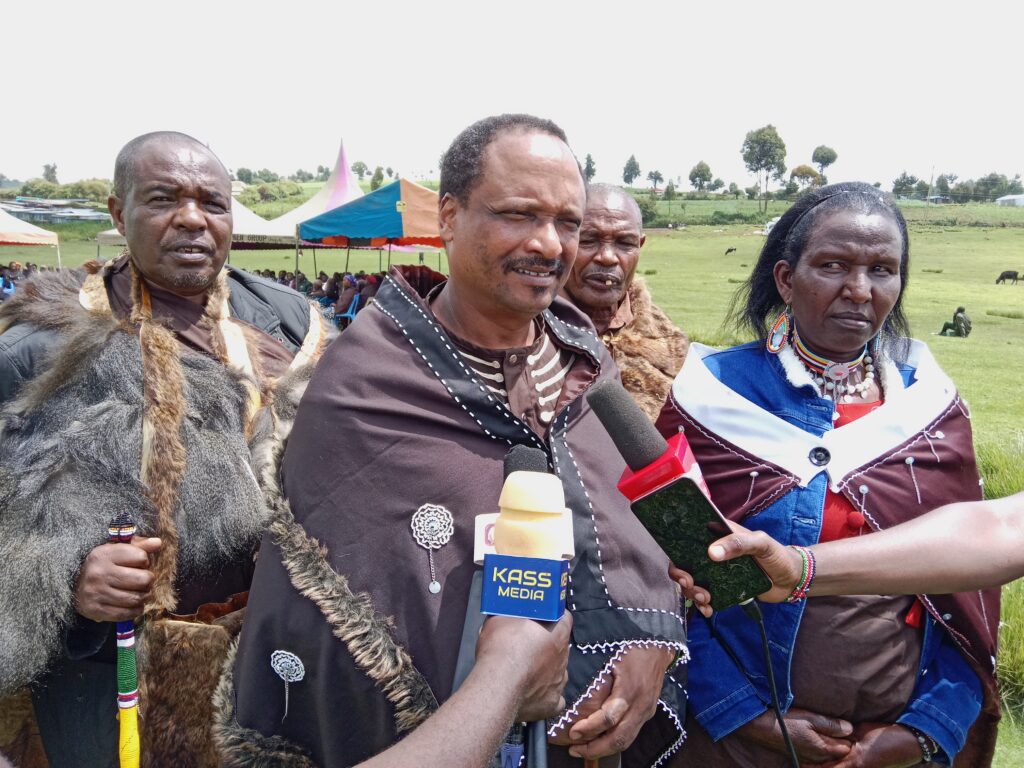
The African Court on Human and Peoples’ Rights (AfCHPR) has affirmed its earlier decision in Ogiek’s case against State(Kenya Government.
In directions by court on December 4, 2025, the court sitting in Arusha, Tanzania found that the Republic of Kenya has failed to comply with its decisions in the matter of African Commission on Human and Peoples’ Rights v. Republic of Kenya (Application No. 006/2012).
According to the Court, Kenya has failed to fulfill several of its earlier orders relating to the protection of the Ogiek community.
It should be noted that in 2017, the Arusha landmark ruling recognized Ogiek Peoples’ ancestral land and the right to community title deed within the Mau Complex.
The government of Kenya was tasked with compensation and restoration of the Ogiek Peoples, having violated their rights.
However, in the directions on the progress made by government of Kenya, the court found that Kenya had not made any of the compensation payments ordered in favour of the Ogiek community, namely KES 57,850,000 (USD 445,000) for economic loss and KES 100,000,000 (USD 770,000) for the community’s suffering, and directed Kenya to immediately pay the full amounts.
The Court also noted that Kenya had not completed the required identification, delimitation, demarcation and collective titling of Ogiek ancestral lands.
While it acknowledged the creation of taskforces to facilitate the identification, delimitation, demarcation and possible titling of Ogiek ancestral lands, the Court found that the steps taken were not sufficient and lacked a clear, time-bound plan for full implementation.
In this regard, the court has ordered Kenya to urgently undertake all necessary measures to finalise the process.
The Court also determined that Kenya had not begun the consultations required to resolve concessions and leases affecting Ogiek ancestral lands, and stressed that such discussions with both the Ogiek and relevant third parties must commence without delay.
On recognition of the Ogiek, the Court noted that simply acknowledging the Ogiek as an indigenous people is not enough unless practical steps are taken to ensure they can fully exercise and enjoy their rights.
The Court found that Kenya’s consultations with the Ogiek were inadequate and fell below the required threshold for genuine, meaningful and continuous engagement.
The Court also found that the Community Development Fund that it had ordered had not been set up and that its Judgments in this matter had still not been published as earlier ordered.
Kenya was thus ordered to take immediate steps and act without delay on all these outstanding issues.
The Court declined to issue new provisional measures despite the allegations of ongoing violations, noting that its existing orders, if implemented, could sufficiently address the alleged continuing violations.
Ogiek Peoples Development Program (OPDP) Director Daniel Kobei has welcomed the decisions and directions of the court on the compliance by Kenya State.
He says, implementation of the orders by the Kenyan Government is the only way to respect the indigenous peoples.